
If your building still runs on fluorescent lighting, this is no longer a future issue. It is a current compliance reality, and it is already reshaping supply chains across Canada.
Under the authority of the Canadian Environmental Protection Act (CEPA), the federal government has significantly restricted the manufacture and import of most mercury-containing lamps through the Products Containing Mercury Regulations. These regulations directly affect the majority of fluorescent lamps used in commercial, institutional, industrial, and retail buildings nationwide.
The fluorescent ban in Canada is not theoretical. It is active effective January 1, 2026. And if your maintenance strategy depends on replacing fluorescent tubes as they fail, that strategy is becoming increasingly unstable.
Fluorescent lamps contain mercury, a toxic substance listed under Schedule 1 of CEPA. When lamps break or are improperly disposed of, mercury can contaminate soil and water systems and release vapour that poses health risks.
The federal government’s position is straightforward: viable mercury-free alternatives exist, primarily LED technology, and therefore mercury-containing lighting is being systematically removed from the Canadian market.
This shift also aligns Canada with international commitments under the Minamata Convention on Mercury, a global agreement designed to reduce mercury use and prevent environmental contamination. Canada is not easing into this transition. It is executing it.
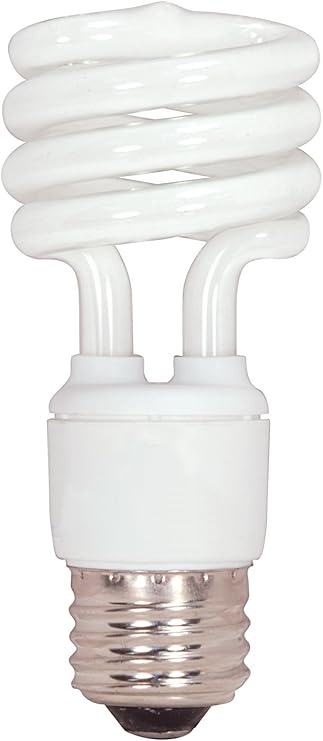
Most general-service fluorescent lamps — including common linear T8 and T12 lamps, compact fluorescents (CFLs), and many specialty configurations — are now restricted from manufacture and import. There have been limited exemptions and sell-through allowances, but those do not change the structural direction. The supply pipeline is shutting down.
What this means in practical terms is that distributors cannot replenish many categories of fluorescent inventory. Once current stock is depleted, replacement lamps will become harder to find and more expensive to procure. Some categories are already experiencing volatility. Businesses that assume they can simply “order more later” may find that later does not exist.
It is important to understand that these are federal regulations. They apply across every province and territory. While recycling and waste handling requirements vary provincially — and responsible disposal of mercury-containing lamps remains critical — the prohibition on manufacturing and importing these products is national law. Whether you operate in Ontario, Quebec, Alberta, or British Columbia, the regulatory landscape is the same.
Many building owners mistakenly believe this only affects manufacturers or importers. While the legal prohibition applies to those parties, the operational impact lands squarely on facility owners and operators. If you cannot source compliant replacement lamps, your lighting system becomes a liability. If emergency maintenance forces you into reactive retrofits, costs escalate. If your ESG reporting or sustainability disclosures are scrutinized, reliance on mercury-based lighting becomes harder to justify.
The financial consequences of waiting are predictable. As availability decreases, prices increase. Already, certain fluorescent lamp SKUs in Canada have risen significantly in price due to constrained supply. Mixed environments — partial LED conversions alongside aging fluorescent systems — create operational inefficiency and maintenance complexity. Most importantly, reactive capital spending under time pressure almost always costs more than a planned transition.
This is not a temporary supply chain disruption. It is a permanent regulatory shift.
The federal government has clearly signaled that mercury-containing products are being eliminated wherever suitable alternatives exist. Fluorescent lighting will not return to status quo.
If you operate commercial buildings, industrial facilities, warehouses, schools, arenas, retail chains, or multi-site portfolios, the responsible course of action is to conduct a lighting audit now. Identify every fluorescent lamp type in use, assess on-site inventory, determine where failure risk is highest, and develop a phased LED transition strategy. Confirm your mercury recycling and disposal procedures to ensure they align with both federal and provincial requirements.
Organizations that move early will manage this transition on their own terms. Those that wait will respond under pressure, potentially facing higher costs, reduced availability, and operational disruption.
The fluorescent ban in Canada is active. The supply chain is contracting. And every business operating fluorescent lighting needs a plan.